


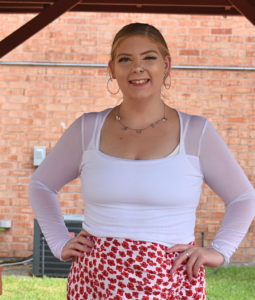
When news broke that Hayden Panettiere’s death had been ruled an accidental overdose involving fentanyl and other substances, many people were stunned. Hailey, a graduating participant in our program, wasn’t surprised, and she wasn’t distant from it either.
“Stuff like that is so scary, because you can be someone homeless on the street or you can have all the money in the world, and fentanyl doesn’t discriminate,” she said. “It’s silent, because a lot of people don’t know it’s laced with something.”
She was 12 when she first used drugs. Like a lot of kids, she didn’t see the danger. “I thought it was just what teenagers did,” Hailey said. “I thought I was just having fun.”
Over the years, her use escalated and her life unraveled. She lost her home, her job and her car.
The night she didn’t see coming
At 23, while pregnant, Hailey bought Xanax from a stranger at a bar. She remembers almost nothing after that, just waking up in an ambulance after being given Narcan.
“I just woke up hyperventilating. I was sweating. It felt like I was in a nightmare,” she said. “It turns out the Xanax bars were pressed with fentanyl.”
Her experience is more common than many people realize. Pills that look like prescription medication can be counterfeit and contain fentanyl. Hailey estimates that “like 80 percent” of the people she knows were surprised to learn fentanyl was in what they were using. That number is her own estimate, but it reflects what she’s seen.
Why it was so hard to walk away
After that overdose, Hailey says, fentanyl was easy to find. “I said I wanted to get high, and I just got it. It’s accessible anywhere.”
She also remembers how fast it took hold. “I’ve tried a lot of drugs, but fentanyl was the absolute strongest drug I have ever tried, and I instantly got hooked.”
She doesn’t mince words about where it could have ended. “If I didn’t come to treatment here at Santa Maria, fentanyl would have taken me.”
Treatment number eight, and what changed
When Hailey came back to Santa Maria, it was her eighth time in treatment. This time, she asked for help because she was afraid for her life. “I said, ‘I need to go to treatment. I’m going to die.’”
Through the care and support of her team, something shifted. One piece of advice from her counselor changed how she thought about her own recovery: “Don’t focus on why you keep relapsing. Focus on why you can’t stay sober.”
“That one simple sentence shifted my whole perspective on my recovery,” Hailey said.
Once she stopped asking why she kept relapsing, she began to see what she had been running from. “I was running from me,” she said. She had never truly let go of the person she became while she was surviving, and this time she did. “I can’t run from me, because anywhere I go, I take me with me.”
Building something new
Today, Hailey lives in Santa Maria’s recovery housing, with the structure and accountability she says she never had after previous treatment programs. She’s focused on a future for herself and her children.
“I’m ready to be the cycle breaker,” she said. “I’m ready to start making a new life for me and my children and a new generation.”
According to the Texas Department of State Health Services, fentanyl-related deaths fell 46% between 2023 and 2025. That’s real progress, and Haley’s story is a reminder of why prevention and accessible treatment still matter.
Her message to anyone who is still using is one of hope, with a practical step to stay alive. She encourages people to use fentanyl test strips, because “it’s becoming a silent epidemic.”
“People don’t deserve to die just because they’re using drugs,” she said. “Just because you’re not ready right now doesn’t mean you’re worthy of death. You’re worthy of a good life, whether you’re ready for it now or not.”
